How to choose
Robot, stick or barrel: which vacuum suits your floors
Floor mix and furniture clearance decide this, not suction claims. Here is the time each machine really costs you over a year, and what the law guarantees.
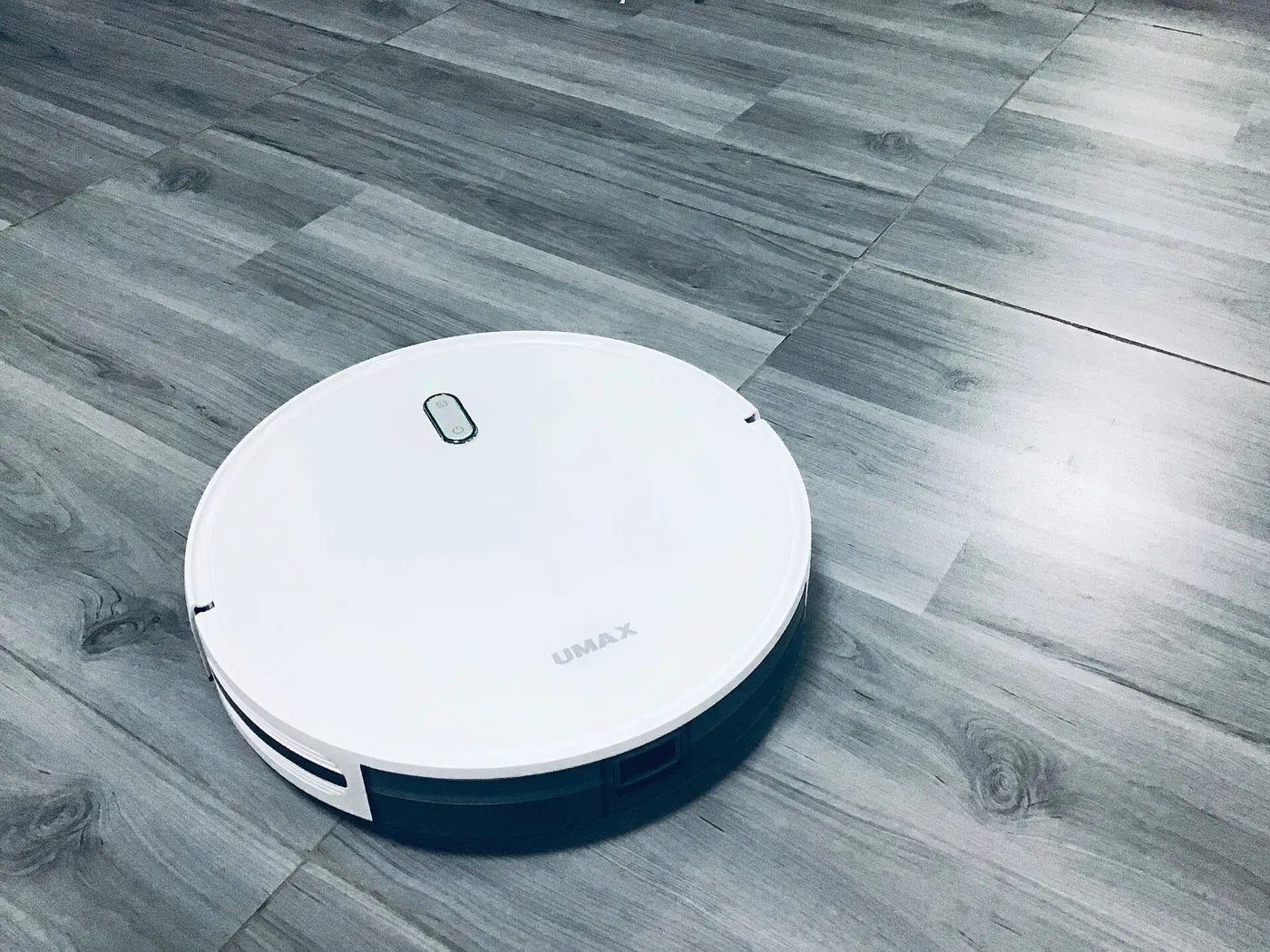
Vacuum marketing in Australia is a numbers contest that avoids the only two numbers that settle the choice: what your floors are made of, and how much clearance there is under your furniture. Everything else — suction figures, bin volume, app features — only matters once those two are answered.
This guide works through the decision in that order, then puts a time cost on each machine so the three options can be compared on something other than price. Prices quoted are examples, GST inclusive as Australian consumer prices are advertised, and this site has not tested any machine or connected any price feed.
Start with the floor mix, not the spec sheet
Robots are built for continuous, obstacle-free hard floor. They do well on tile, vinyl, floating timber and low-pile rugs, and they struggle where the pile is deep enough that the brush bar has to lift the fibres rather than sweep across them. A house that is 80 per cent hard floor is a house where a robot can carry the routine; a house that is 80 per cent deep pile is a house where it will handle the 20 per cent and you will still own a second machine.
Write down the actual split before you shop: square metres of hard floor, square metres of low pile, square metres of deep pile. On a 110 m² home with 80 m² of hard floor, the robot is covering 73 per cent of the work; on the same home with 25 m² of hard floor, it is covering 23 per cent, and you are paying twice for the same job.
The second question is how often each surface is walked on. Hard floor in a hallway shows dust in 2 days; a rug in a spare room shows it in 2 weeks. A machine that handles the high-frequency surface well is doing more for you than one that handles the occasional surface well.
- Measure the hard floor area and the carpet area separately, in square metres
- Mark which rooms get vacuumed weekly and which get vacuumed monthly
- Count the doorway thresholds a robot would have to climb between those rooms
- Note any room with a floor-length curtain, a cable run or a pet bowl, because those are the three things robots most often fail on
- Decide from that split whether you are buying one machine or two
Clearance is the measurement that decides a robot
A robot cleans under furniture only where it fits, and the gap it needs is its body height plus the lidar turret if it has one. Measure the clearance under the bed, the sofa, the kitchen kickboard and the lowest chest of drawers, and write each figure down in millimetres before you look at a single model.
The arithmetic is unforgiving because it is binary. A machine 96 mm tall does not go under an 85 mm gap at reduced speed; it does not go under it at all, and that floor area stays on your list for the stick vacuum. A flatter machine without a turret may be 78 mm and clear the same gap, which can be worth more than any difference in suction between the two.
The same applies to width at the doorway and to threshold height. A robot that cannot climb a 20 mm threshold will clean one side of the house and report the job complete, which is the single most common reason owners describe a robot as disappointing in month two.
| Measurement | Where to take it | What it rules out |
|---|---|---|
| Lowest furniture clearance | Under bed, sofa, kickboard, drawers | Any robot taller than that gap |
| Highest threshold | Between hard floor and carpeted rooms | Any robot whose climb limit is below it |
| Narrowest doorway | Laundry and ensuite doors | Wide upright heads and large barrel bodies |
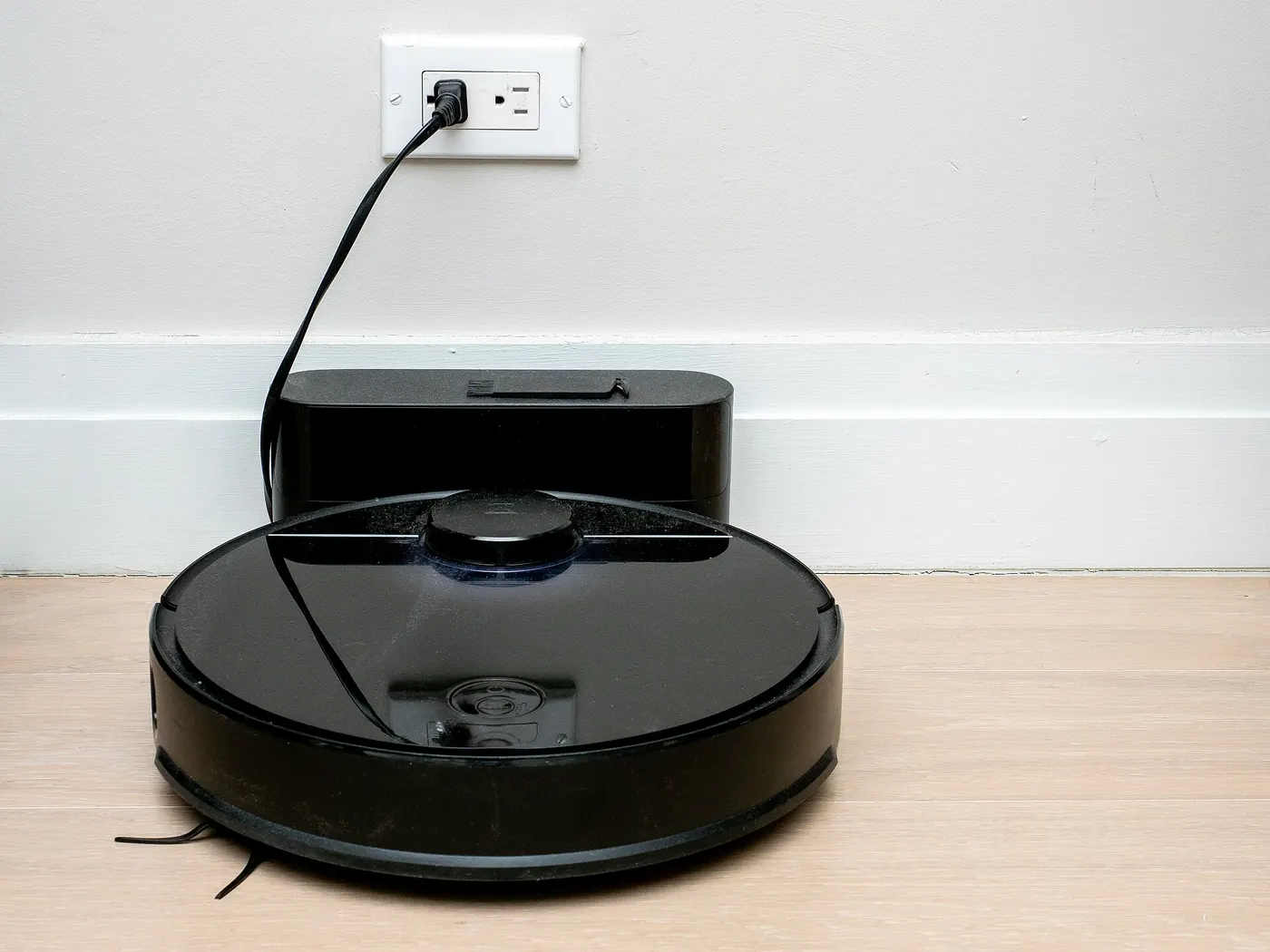
| Dock wall space | A flat run of skirting board near a power point | Docks that need clearance either side |
| Stair count | Between levels | A single robot for a two-level home |
Take all five before comparing products. Four of the five are free to change later by moving furniture; the stair count is the one that is not.
What each machine costs you in time, not dollars
Time is the cost that never appears on a spec sheet, and it is the one that differs most between the three formats. A robot needs you to start it, clear the floor and empty the bin, which is about 4 minutes of attention per clean. A cordless stick needs the full 18 minutes because you are the one pushing it. A corded barrel takes 25 minutes because the cord has to be moved between power points.
Multiply those minutes by a realistic frequency and the gap is large. A robot run 5 days a week does 260 cleans a year for about 17 hours of your attention. A stick run 3 times a week does 156 cleans for 47 hours. A barrel run twice a week does 104 cleans for 43 hours.
Read that table as a trade, not a ranking. The robot buys back roughly 30 hours a year against the stick, and it does so by cleaning more often and less thoroughly. Whether that is the right trade depends on the floor split from the first section, which is why the two sections belong together.
| Machine | Minutes per clean | Cleans per week | Cleans per year | Hours per year |
|---|---|---|---|---|
| Robot, supervised start and bin empty | 4 minutes | 5 | 260 | 17 hours |
| Cordless stick | 18 minutes | 3 | 156 | 47 hours |
| Corded barrel | 25 minutes | 2 | 104 | 43 hours |
Hours are minutes multiplied by cleans per year, divided by 60: 4 × 260 ÷ 60 = 17, 18 × 156 ÷ 60 = 47, 25 × 104 ÷ 60 = 43. Substitute your own minutes and frequency in the cost-per-year calculator on this site.
What Australian law guarantees that the box does not
The Australian Consumer Law sits in Schedule 2 of the Competition and Consumer Act 2010, and two of its consumer guarantees matter directly when you are choosing between machines. Section 54 is the guarantee as to acceptable quality. Section 58 is the guarantee as to repairs and spare parts, which is the one that decides whether the eight-year column in a cost calculation is realistic.
Section 58 obliges a manufacturer to take reasonable action to ensure that repair facilities and parts are reasonably available for a reasonable period after supply, unless the consumer was given written notice before agreeing to the purchase that they will not be. That exception is the thing to look for: a product sold with an explicit written notice that parts will stop at a given date is telling you its service life in advance.
Applied to a vacuum, that means asking a specific question before you buy rather than a general one. Does the manufacturer publish a parts list with a filter, a brush bar, a battery and a wheel module on it? A machine with four listed parts can reach year eight; a sealed machine with none on the list cannot, whatever its warranty says.
- Find the manufacturer's spare parts page before buying, and check that a filter, brush and battery all appear on it
- Look for any written notice stating a date after which parts will not be available
- Note whether the battery is user-replaceable or sealed into the body, because that single fact caps the machine's life
- Keep the receipt: consumer guarantees under the Australian Consumer Law apply regardless of any separate manufacturer warranty
Why there is no star rating to compare
Australian appliance labelling runs through the Greenhouse and Energy Minimum Standards Act 2012. Under that Act, a product only becomes regulated once a GEMS determination names its product class, which is the mechanism Part 2 of the Act sets up. Where no determination names a class, there is no minimum standard and no comparable label for it.
If the machine in front of you carries no Energy Rating Label, that is what you are looking at. The only published electrical figure is then the manufacturer's rated input power in watts, which describes the maximum the motor can draw, not what it draws cleaning your floor and not how much dust it lifts.
That makes running cost something you compute instead of read. A corded barrel rated at 1,400 W, run 43 hours a year, uses about 60 kWh; at an assumed 35 cents per kilowatt hour that is $21 a year. A robot doing 260 cleans uses about 40 kWh, or $14. The running-energy calculator on this site takes your own tariff, because the Australian Bureau of Statistics recorded electricity rising 12.8 per cent in the 12 months to September 2026 and a national average would already be out of date.
| Machine | Hours per year | Energy per year | Cost at $0.35/kWh |
|---|---|---|---|
| Corded barrel at 1,400 W | 43 hours | 60 kWh | $21 |
| Cordless stick, charging included | 47 hours | 25 kWh | $9 |
| Robot, 260 cleans plus dock standby | 17 hours | 40 kWh | $14 |
Rated power is a maximum, so a plug-in meter will usually read lower than this arithmetic. The tariff of 35 cents per kWh is an assumption stated as such, not a published rate.
Before you buy
- Measure hard floor and carpet area separately and write both down in square metres
- Measure the lowest furniture clearance in the house, in millimetres
- Measure the highest threshold a robot would have to climb
- Find a flat run of skirting board near a power point for the dock
- Open the manufacturer's spare parts page and confirm filter, brush and battery are listed
- Check whether the battery is user-replaceable or sealed in
- Multiply your realistic minutes per clean by your realistic cleans per week before comparing prices
Questions readers ask
- Can a robot replace a stick vacuum entirely?
- Only where the floor is almost all hard and there are no stairs. The robot covers the frequency; it does not cover stairs, upholstery, car interiors or the corner behind a door. On the figures above it buys back roughly 30 hours a year against a stick, and most households spend part of that saving running the stick once a fortnight anyway.
- How much clearance does a robot actually need?
- Its own body height, plus any lidar turret, plus a few millimetres so it does not scrape. The number that matters is the lowest gap in your house, not the average. Measure under the bed, sofa, kickboard and drawers, take the smallest of the four, and treat it as a hard filter on the shortlist.
- Is higher wattage the same as better pickup?
- No. Rated input power is the maximum the motor can draw, which is an electrical figure rather than a cleaning one. Pickup depends on airflow, seal at the floor head and brush design. Because no Energy Rating Label applies when no GEMS determination names the class, wattage is simply the number that happens to be printed, not a performance ranking.
- What does the spare parts guarantee actually give me?
- Section 58 of the Australian Consumer Law obliges the manufacturer to take reasonable action so that repair facilities and parts are reasonably available for a reasonable period after supply. The exception is a written notice given before purchase that they will not be. In practice it makes the published parts list the single most useful page on a manufacturer's website.
- Barrel or upright for a mostly carpeted house?
- The decision usually comes down to stairs and storage. A barrel is easier to carry up a staircase and stores in a cupboard; an upright keeps the head on the floor and suits a single large carpeted level. On the time table above a barrel run twice a week costs 43 hours a year, and the format change does not move that figure much.
Sources
- Competition and Consumer Act 2010, Schedule 2 — Australian Consumer Law, consumer guarantees including s 54 acceptable quality and s 58 repairs and spare parts — checked 2026-11-03
- Greenhouse and Energy Minimum Standards Act 2012 — GEMS products, determinations and product classes — checked 2026-11-03
- Australian Bureau of Statistics — Consumer Price Index, Australia, September 2026 — checked 2026-11-03
Some links on this site can earn us a commission. That does not change which product a guide recommends, and it adds nothing to your price. Advertising is not enabled on this site yet. When it is, ads will be labelled and kept visually separate from the guides.